GREEN ROADFAMILY LEGACY FILMSInquire
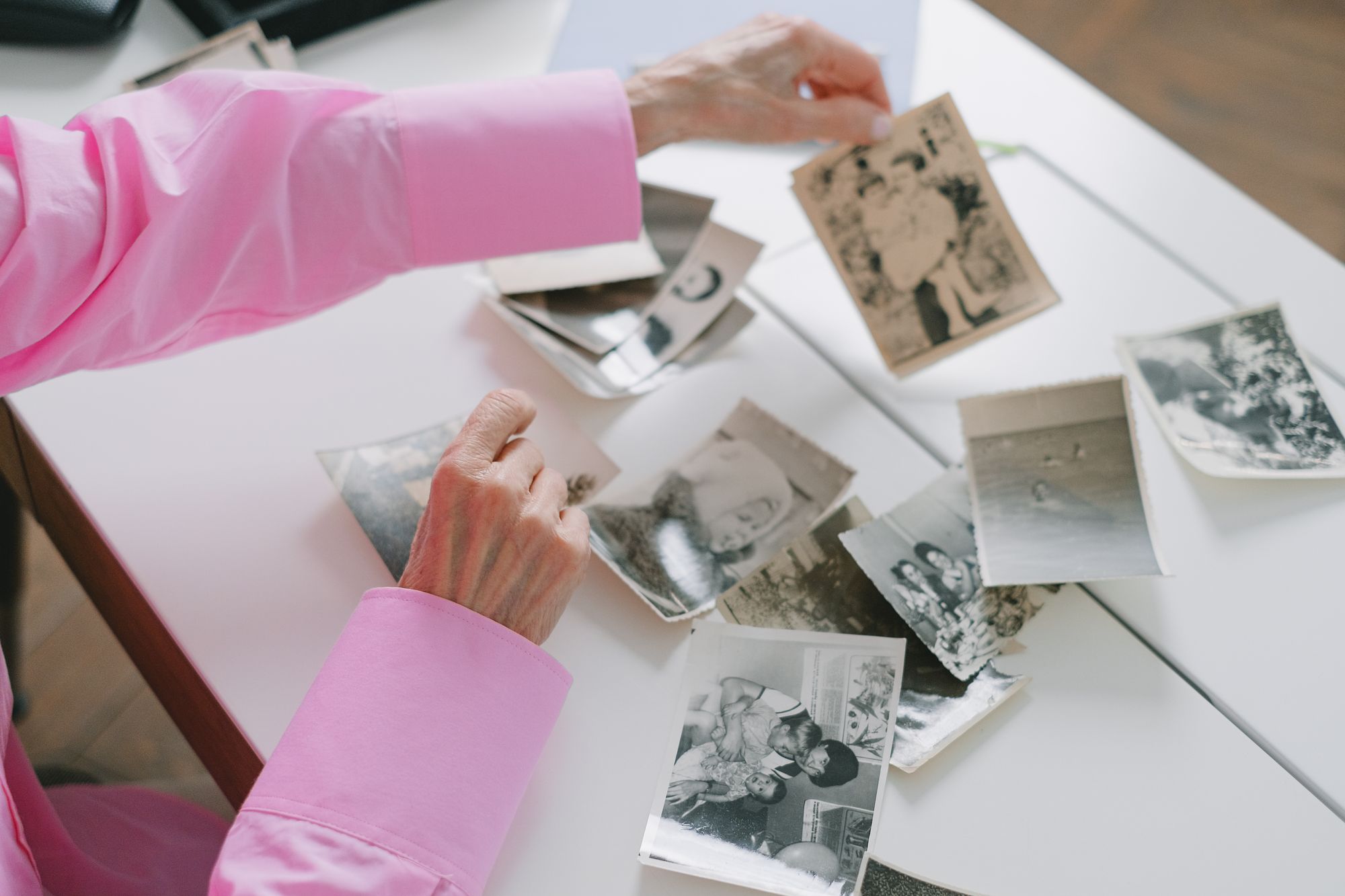
A mature couple revisiting their family photographs together

YOUR STORY.
THEIR LEGACY.

Private films made from the lives, voices, places, and memories that make a family what it is.

Not an event.
Not a recording.
A film for generations.

SOME MEMORIES ARE MEANT TO BE REMEMBERED.
OTHERS ARE MEANT TO BE TOLD.

A Private Legacy Film is a cinematic documentary made for one family — shaped around the people, stories, places, photographs, voices, and moments that cannot be replaced.

We begin by listening.

To understand who someone was, what shaped them, what they carried, what they gave, and what they want the generations after them to know.

We take the time to look beyond the photograph, the achievement, and the familiar family story — toward the life that exists behind them.

The result is not a family video.

It is a film with a story, a perspective, and a life of its own.

A film you can return to years from now and still hear the people you love speaking.

Not simply as they are remembered.

But as they were.

WHAT IS A PRIVATE LEGACY FILM?

A Private Legacy Film is a documentary made for one family — a cinematic portrait of the people, experiences, choices, and places that shaped a life.

A life well lived holds more stories than most of us ever have time to ask about.

The career that took decades to build.

The country they left behind.

The risks they took.

The people who helped them along the way.

The choices that changed everything.

The things they sacrificed — and the things they never told anyone.

Our parents and grandparents often carry entire chapters of family history that exist nowhere else but in their memories.

And yet, there is rarely a moment to sit down and ask.

They were busy building their lives.

We became busy building ours.

The conversations we meant to have kept waiting.

A Private Legacy Film creates that time.

We begin with thoughtful conversations — without a script, without a performance, and without asking anyone to become someone they are not.

We spend time with the people, places, photographs, objects, and rituals that hold meaning.

We follow the stories beneath the facts.

The meaning behind the choices.

The memories no photograph can explain.

Because a legacy is not simply what someone accomplished.

It is the life behind those accomplishments.

One day, your children or grandchildren may want to know who you were before you became the person they knew.

Where you came from.

What you believed.

What you were afraid of.

What you hoped for.

What it took to build the life they inherited.

They should not have to know you only through photographs, dates, and stories passed from one person to another.

They can hear it from you.

In your voice.

In your words.

In the way you remember it.

The finished film may follow one life, a family shaped by generations, a journey across countries, a marriage, a business, a tradition, or a story that has never been fully told.

Each film is different because every life is different.

Privately commissioned.

Individually crafted.

Made for the family who will carry the story forward.

Not made for an audience.

Made for yours.

WHO IS THIS FOR?

Every family has stories that deserve to continue.

Sometimes, the person who comes to us wants to tell their own story — to leave something more personal than photographs, documents, or accomplishments for the generations that follow.

Sometimes, a daughter, son, or grandchild comes to us because they want to preserve the story of a parent or grandparent — and perhaps, for the first time, truly understand the person behind the role they have always known.

The storyteller and the subject do not always have to be the same person.

THE STORY YOU LEAVE

You have lived a life with a story behind it.

Perhaps you built a business, pursued a profession, devoted decades to teaching, learning, or serving others, created something meaningful, crossed borders, raised a family, carried on a tradition, or followed a path that took you somewhere you never expected to go.

The accomplishments are part of the story.

But they are not the whole story.

There are the choices.

The challenges.

The people who changed your path.

The places you left behind.

The lessons you learned.

The moments that changed you.

And the things you want the generations after you to understand.

A Private Legacy Film gives those things a voice.

Not simply what you leave behind.

But who you were.

THE STORY YOU WANT TO KEEP

Perhaps your parents or grandparents have spent a lifetime building, giving, teaching, creating, and caring for the people around them.

You know them as your mother or father.

Your grandmother or grandfather.

But there may still be a story you have never heard.

Who were they before they became your parents or grandparents?

Where did they begin?

What did they dream about?

What did they have to overcome?

What did they leave behind?

What did they learn along the way?

A film creates the time and space for those conversations.

So you can hear their stories in their own words — and future generations can hear them too.

Sometimes, you make the film because you want your story remembered.

Sometimes, you make it because you finally want to hear theirs.

WHAT KIND OF STORY?

A LIFE

A life shaped by ambition, knowledge, creativity, service, resilience, discovery, or change.

A career built over decades. A teacher's calling. A professor's life of learning and teaching. A physician's years of service. An artist's body of work. An entrepreneur's journey. A parent who built a family from the ground up.

The accomplishments are part of the story.

The life behind them is the story.

A FAMILY

A history larger than a family album.

The people who came before. The traditions they carried. The relationships that shaped generations. The stories repeated around the dinner table — and the ones that were never told.

A family is more than names and dates.

It is a story that continues.

A JOURNEY

A life marked by movement and transformation.

Migration. Reinvention. Starting again. Leaving one world behind and building another. Crossing cultures, borders, languages, and generations.

The journey itself becomes part of what a family inherits.

A LEGACY

For those thinking about what they want to leave behind beyond what can be inherited.

A business. A body of work. Knowledge. A home. A tradition. A way of seeing the world.

And the stories that give all of these things their meaning.

A legacy is not only what you leave.

It is what you leave understood.

A collection of old family photographs being carefully reviewed
YOUR FAMILY ARCHIVE
BELONGS IN MOTION.

You may already have a family archive.

Photographs in albums.

Home movies on old tapes.

Letters in a drawer.

Documents in a box.

Recipes written in familiar handwriting.

Objects that have somehow made their way from one generation to the next.

They preserve pieces of a life.

But they cannot tell the whole story.

Because some of the most important parts of a life exist only in memory — and in the memories of the people who shared it.

A daughter may remember her father in a way he never imagined.

A son may know a side of his mother that no photograph could ever show.

A grandchild may remember a small gesture, a familiar phrase, or a story that everyone else has forgotten.

A friend may remember who you were before you became a parent.

A colleague may remember the decision that changed your path.

A student may still remember something you taught them decades ago.

These are not simply memories.

They are different ways of seeing the same life.

And sometimes, the people closest to us hold pieces of our story that even we have forgotten.

That is why we don't simply collect your family archive.

We listen to it.

We bring together photographs, films, letters, objects, places, and memories with the voices of the people who lived alongside you.

An old photograph may open a forgotten chapter.

A letter may bring an old voice back into the room.

A familiar place may take you back to the beginning.

And a story told by someone who loves you may reveal a part of yourself you never knew others saw.

The result is more than a record of what happened.

It is a portrait of a life — seen from more than one point of view.

Because one day, the people who know these stories may not be here to tell them.

The photograph will remain.

The house may remain.

The objects may remain.

But the voice behind the story may not.

A film gives that voice somewhere to live.

For the people who know you today.

And for the generations who will know you through it.

An archive can preserve what happened.

A film can preserve the person who was there.

THIS IS NOT
event videography.

WE COME LOOKING FOR A STORY.

We don't simply show up with a camera.

We spend time with the people whose lives we are trying to understand.

Maybe the story begins with your father at the kitchen table, remembering the country he left behind.

Maybe an old photograph brings back something he has not spoken about in forty years.

Maybe your mother tells us about the decision that changed the family's future.

Maybe your grandmother remembers a childhood no one in the family has ever heard about.

Maybe a former student tells us about the teacher she was long before you knew her as your grandmother.

Or maybe two people who have spent fifty years together sit side by side and tell us, for the first time, what those fifty years actually meant.

Sometimes, we have to go where the story began.

The house where someone grew up.

The school where they spent their formative years.

The first workplace.

The neighborhood they left behind.

The city where they built a life.

Or, when the story calls for it, another country.

We might meet the people who were there.

We might uncover photographs no one has seen in decades.

Letters.

Home movies.

A recipe in someone's handwriting.

A book with a name inside.

A recording.

A place that has changed — or disappeared completely.

Each discovery can open another door.

One memory leads to another.

One person leads to another.

One photograph changes the question.

And suddenly, the story you thought you knew begins to reveal something you never knew was there.

That is the difference.

We are not trying to record everything.

We are trying to discover what matters.

Because the person you know as your father was once a young man with a life you never saw.

The woman you know as your mother had dreams, fears, ambitions, and choices long before she became your mother.

The grandfather your children know today was once someone your family never knew at all.

And the couple you have always known as your parents once had a life that belonged only to the two of them.

Those stories are still there.

We help bring them into the light.

A wedding captures a beginning.

A family video records a moment.

A Private Legacy Film can uncover an entire life.

It has characters.

It has places.

It has discoveries.

It has things you never expected to hear.

And it has your family's own voice at the center of it.

You may come to us thinking you already know the story.

You may leave with a story you never knew you had.

This is not event videography.

It is private documentary filmmaking — made to be discovered today, and remembered for generations.

BEFORE WE FILM

A STORY-FIRST APPROACH

You may think you already know the story.

Then we start asking questions.

And suddenly, there is the photograph you have never seen.

The friend you have not spoken to in thirty years.

The place your father still remembers exactly as it was.

The letter your mother kept but never talked about.

The story your grandmother tells differently from everyone else.

The former student who still remembers something your mother taught decades ago.

One discovery leads to another.

And the story becomes bigger than anyone expected.

That is why we do not begin with a camera.

We begin with curiosity.

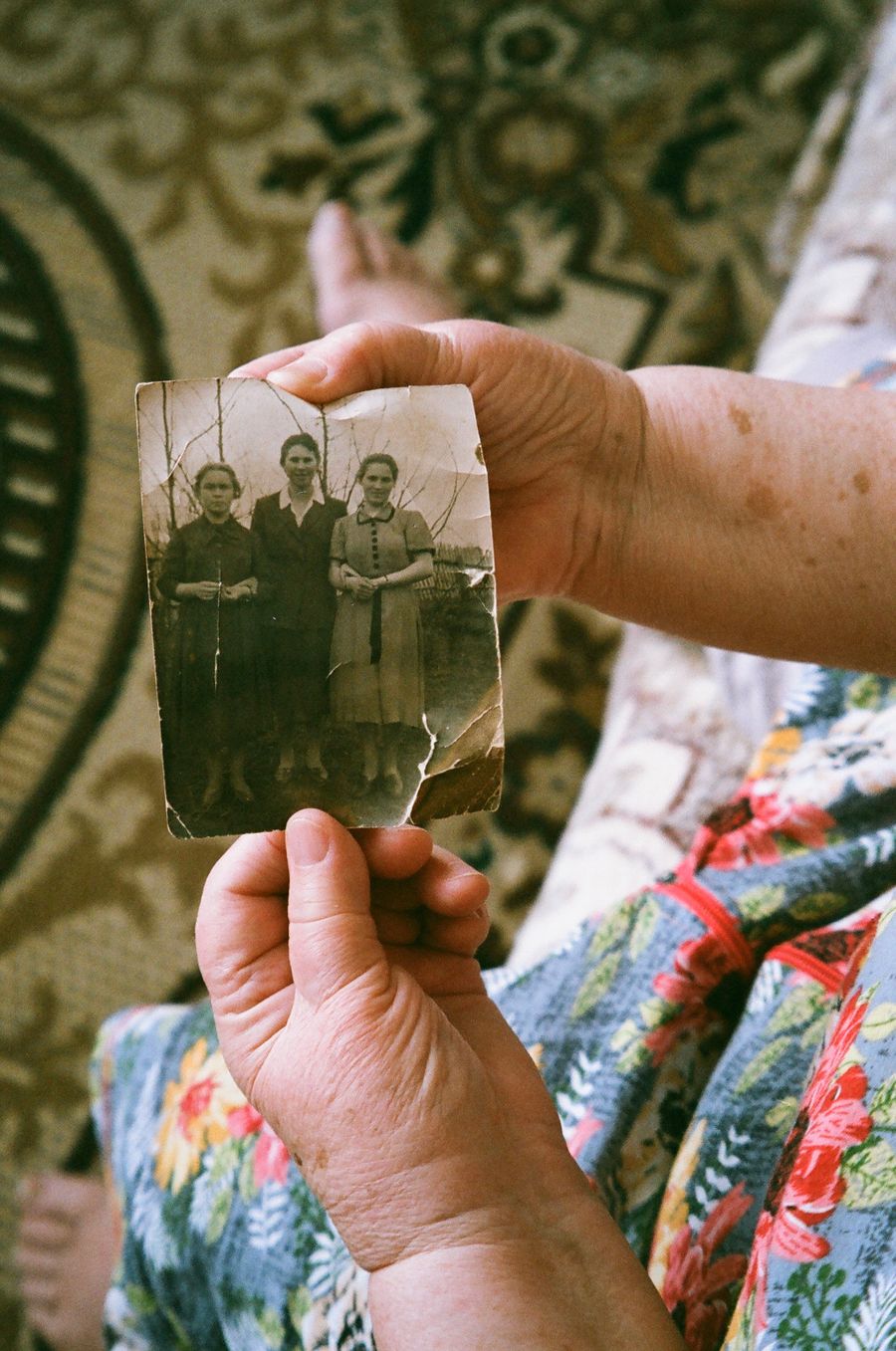
Elderly hands holding a treasured family photograph

We listen.

To the person whose story we are telling.

To the family.

And, when the story calls for it, to the people who shared different chapters of that life.

We look beyond dates, achievements, and milestones.

We look for what shaped a person.

The decision that changed everything.

The person who opened a door.

The place they left behind.

The dream they followed.

The one they gave up.

The lesson they learned the hard way.

And the things they want the generations after them to understand.

Sometimes, one question opens an entire chapter.

FOUR FORMS FOR FOUR KINDS OF STORY

Every story has its own shape.

Some stories belong to one person.

Some are created by two people, over a lifetime.

Some unfold across generations.

And some live in the quiet things a family carries forward — a voice, a recipe, a language, a lesson, a tradition, a way of seeing the world.

We don't begin with a package.

We begin with the story.

FOR ONE LIFE.

What if your children could meet the person you were before you became their parent?

What if your grandchildren could hear the voice of the young person their grandfather or grandmother once was?

The Portrait is a film centered on one life — the life behind the person everyone thinks they know.

Where they began.

What shaped them.

Who changed them.

What they risked.

What they lost.

What they built.

What they learned.

And the choices that quietly changed everything.

It might be the story of a parent, a grandparent, an artist, a teacher, a physician, an entrepreneur, an immigrant, a scholar, or someone whose life never made the headlines but changed an entire family.

We look beyond accomplishments.

Beyond the résumé.

Beyond the dates.

We look for the human being inside the story.

Because the person you know today was once someone you never knew.

The Portrait gives that person a voice.

FOUR FORMS.

ONE PURPOSE.

To give a story the form it deserves.

One life.

Two people.

A legacy.

An heirloom.

Different stories may take different shapes.

But the question beneath them is the same:

What do you want the generations after you to know?

Because they may inherit your photographs.

Your home.

Your books.

Your business.

Your belongings.

But the things that tell them who you were are different.

Your voice.

Your stories.

Your lessons.

Your way of seeing the world.

Those cannot simply be inherited.

They have to be passed down.

And sometimes, the most meaningful thing you can leave your family is a way to hear you long after the conversation would otherwise have ended.

A FILM HAS A POINT OF VIEW

A LIFE IS NOT A TIMELINE.

It is a collection of moments, contradictions, memories, places, relationships, choices, and things that are sometimes difficult to put into words.

A film has to decide what belongs.

What does not.

What should be heard.

What should remain unseen.

Where to begin.

Where to pause.

And what one moment might reveal about an entire life.

That is where filmmaking begins.

We are not simply recording what happens in front of a camera.

We are looking for meaning.

A father remembers one version of his childhood.

His daughter remembers another.

A photograph suggests one story.

A letter reveals another.

Someone remembers the decision that changed everything.

Someone else remembers what happened the morning after.

None of these perspectives has to cancel the others.

Sometimes, the truth of a life lives somewhere between them.

We pay attention to those spaces.

To what is said.

To what is left unsaid.

To the details that seem small until they suddenly become important.

A hand resting on an old photograph.

A pause before answering a question.

The way someone walks through the house where they grew up.

The recipe they can still make without looking at the instructions.

The expression that appears when they talk about someone they lost.

These are not simply details.

They are part of the story.
THE FILMMAKER'S ROLE

Our work is not to tell you what your life means.

It is to look closely enough to discover what is already there.

We listen.

We question.

We observe.

We make connections.

We follow unexpected threads.

And then we make choices.

What belongs at the beginning.

What deserves more time.

Whose voice changes the meaning of a memory.

When an archival photograph should speak for itself.

When silence says more than another question could.

When a place should become part of the story rather than simply its background.

These choices are what turn material into cinema.

NOT EVERYTHING NEEDS TO BE INCLUDED.

A life can contain hundreds of stories.

A film cannot contain them all.

And it shouldn't.

The goal is not to make the longest record of a life.

It is to make the most meaningful one.

We look for the moments that reveal character.

The connections that reveal a family.

The contradictions that reveal a person.

The details that make a story unmistakably yours.

Because a beautiful film is not created by putting everything on screen.

It is created by knowing what deserves to remain.

YOUR FAMILY'S FILM

There is no formula for this.

No two families carry the same history.

No two people remember a life in exactly the same way.

So every Green Road film develops its own language.

Its own rhythm.

Its own point of view.

The result should never feel like a template with your family placed inside it.

It should feel as though the film could only have been made this way — because it belongs to this life, these people, these places, and these memories.

A Private Legacy Film is not simply a record of what happened.

It is an interpretation of why it mattered.

And that is the difference between preserving a life and making a film about it.

BEYOND THE FILM

WHAT HAPPENS TO A STORY AFTER IT IS TOLD?

A film can preserve a moment.

A great film can preserve a way of seeing.

And a family film can become something even more rare:

A way for one generation to speak to another.

Long after the conversations are over.

Long after the room has changed.

Long after the people in the film have grown older.

Someone can press play.

And they are there again.

A voice.

A face.

A gesture.

A laugh.

A story being told in the way only that person could tell it.

MORE THAN AN ARCHIVE

Your family may already have photographs.

Boxes of letters.

Home movies.

Documents.

Books.

Objects that have traveled from one home to another.

An archive can tell you what survived.

A film can tell you why it mattered.

It can place a photograph back inside the life it came from.

Give a recipe the hands that made it.

Give a family name a face.

Give a tradition its story.

Give a memory its voice.

And sometimes, give a person back to a generation that never had the chance to meet them.

A FILM WITH A FUTURE

The first audience may be you.

Or your parents.

Or your children.

But the last audience is impossible to know.

A child who watches the film today may return to it twenty years from now with entirely different questions.

A grandchild may discover it for the first time long after the film was made.

Someone not yet born may one day watch it and see a family member not as a name in an old photograph, but as a living person with a voice, a personality, and a point of view.

That is when the film becomes something more than a record.

It becomes an encounter.

THE FAMILY KEEPS CHANGING

A family story is never completely finished.

Someone gets married.

A child is born.

A business changes hands.

A new country becomes home.

An old house is sold.

A tradition takes on a new meaning.

Another generation begins asking questions.

The film becomes part of that evolving history.

Not a monument to the past.

A bridge to what comes next.

MADE TO BE KEPT

We make these films privately and with the expectation that they will be kept.

Not created for an algorithm.

Not made to disappear beneath tomorrow's photographs.

Not produced simply to be watched once.

They are made to live alongside the things families already protect.

The photographs.

The letters.

The books.

The objects.

The stories.

Only this time, the archive can look back at you.

It can speak.

SOMEDAY

There may come a day when someone in your family asks a question no one can answer.

“What was she like?”

“What was he like before we knew him?”

“Why did they leave?”

“How did they build this life?”

“Where did our family begin?”

And someone will have an answer.

Not a version passed from memory to memory.

Not a few dates.

Not a photograph without a voice.

A film.

A person speaking.

A life unfolding.

A story waiting to be discovered.

That is what we mean by a legacy.

Not simply leaving something behind.

Leaving something that can still speak.

For your children.

For their children.

And for people you will never have the chance to meet.

The film ends.

The conversation continues.

ABOUT / THE FILMMAKER

THE FILMMAKER

For twenty-five years, I have made films.

Documentaries.

Narrative films.

Television series.

Different forms. Different stories. Different lives.

But after a quarter century of filmmaking, I have come to understand something simple:

The stories we tell are rarely only about the people at their center.

They are also about what those people carry.

Where they came from.

What shaped them.

What they learned.

What they believed.

What they chose to pass on.

And what they chose to change.

I began Green Road Family Legacy Films from that understanding.

Not as an event service.

Not as a way to simply document a family.

But as a private filmmaking practice built around a question I have carried throughout my work:

What will remain of a life when the people who remember it are no longer here to tell it?

I believe the values of a society begin much closer to home.

They begin with families.

A family carries more than a name.

It carries memory.

Language.

Knowledge.

Tradition.

Experience.

Ways of loving.

Ways of surviving.

Ways of understanding the world.

Every generation receives these things, whether they realize it or not.

Some are passed down deliberately.

Others are absorbed quietly — through a conversation at the dinner table, a recipe made the same way for fifty years, a story told about someone who is no longer here, a language spoken at home, a lesson learned from a parent's mistakes, or simply by watching how someone lives.

This is inheritance, too.

We inherit houses.

Photographs.

Books.

Businesses.

Objects.

But some of the most consequential things we inherit cannot be placed in a box or written into a will.

A way of thinking.

A way of seeing.

A way of treating people.

A piece of knowledge.

A memory.

A tradition.

A story.

A voice.

These are the things that shape us — and through us, shape the generations that follow.

This is why I believe every person's story matters.

Not because every story belongs in public.

Many should remain private.

But because every family carries a history that exists nowhere else in quite the same way.

And when those stories disappear, something irreplaceable disappears with them.

That is the space where I believe filmmaking can do something lasting.

I approach each film as I would any serious documentary: with curiosity, with patience, with observation, and with respect for the complexity of a life.

I listen.

I question.

I look for what lies beneath the obvious.

I follow memories into photographs, photographs into places, places into people, and people into chapters that may have remained untold for decades.

Sometimes the story takes us across a city.

Sometimes across a country.

Sometimes across a border.

Because the boundaries of a life are not always the boundaries of a room.

The camera comes later.

First comes trust.

Then curiosity.

Then time.

Then filmmaking.

The result is not simply a record of what happened.

It is a considered film about what that life meant — to the person who lived it, to the people who shared it, and to the generations who will inherit its consequences.

Green Road Family Legacy Films is built for that kind of work.

Private.

Personal.

Cinematic.

Made with the same care I have brought to filmmaking throughout my career.

Because every generation receives more than possessions.

It receives a story.

And every generation has a choice:

What will we remember?

What will we understand?

What will we carry forward?

And what will we leave for those who come after us?

That is where I believe filmmaking can become more than preservation.

It can become a bridge between generations.

Green Road exists for that bridge.

For the stories that shaped a family.

For the voices that carry them.

And for the generations who have yet to hear them.

— Mehdi Rahmani Filmmaker

YOUR STORY REMAINS YOURS.

A Private Legacy Film is made for a family — not for the public.

We understand that the stories entrusted to us may include personal histories, family relationships, private memories, photographs, documents, and conversations that were never meant to be shared beyond those who matter.

We treat that trust as part of the filmmaking itself.

PRIVATE BY DESIGN

Your film is privately commissioned and privately produced.

Nothing is published, exhibited, submitted to festivals, shared on social media, or used for promotional purposes without your clear, explicit permission.

CONTROLLED REVIEW

You remain involved in deciding what becomes part of the final film.

Throughout the process, we work closely with you to review sensitive material and make thoughtful decisions about what should — and should not — be included.

ARCHIVAL CARE

Photographs, letters, recordings, documents, and other family materials are handled with care and returned to you after they have served their purpose in the filmmaking process.

The finished film is delivered privately to the family.

Because some stories are meant to be seen by everyone.

Others are meant to remain within the family.

We make films for the latter.

FAQ

Every film develops at its own pace. Some stories can be shaped within several months. Others require more time — particularly when the story involves multiple generations, extensive archives, travel, or people whose memories need time to unfold. We do not rush the process simply to meet a production schedule. The story determines the pace.

We do — in conversation with you. A Private Legacy Film is a collaboration between the family and the filmmaker. We listen to what matters to you, explore the story independently, and make editorial choices based on character, meaning, structure, and what the film needs. You are never expected to arrive knowing what the film should be. That is part of our work.

No. In fact, we prefer that you don't. We prepare carefully before filming and develop questions based on the life, relationships, photographs, places, and material we discover. The goal is not to rehearse your story. It is to create the conditions for you to remember, reflect, and speak naturally.

Anyone whose perspective contributes meaningfully to the story. That might include family members, friends, colleagues, former students, neighbors, caregivers, or people connected to an important chapter of the person's life. Sometimes one unexpected voice can change the way an entire story is understood.

Not necessarily. Many stories can be told entirely where you live. But if an important part of the story exists somewhere else, we may recommend going there. A childhood home, a former workplace, a neighborhood, a city, or another country can sometimes reveal something that a conversation alone cannot. Travel is never the point. The story is.

Yes. Privacy is central to the way we work. Your film is not published, exhibited, submitted to festivals, shared publicly, or used for promotional purposes without your clear, explicit permission. Private delivery and controlled review are part of the process from the beginning.

We treat family materials as part of the story and handle them with care. We may scan, photograph, record, or otherwise work with materials when necessary for the film. Original materials remain with you and are returned after they have served their purpose in production.

We do not define the value of a film by its running time. The finished film is shaped around the story — what deserves to remain, what can be left behind, and what creates the strongest and most meaningful portrait. The goal is not to preserve everything. It is to preserve what matters.

Yes. Some of the most meaningful films can be built from the traces a person left behind — photographs, letters, home movies, recordings, places, objects, documents, and the memories of the people who knew them. The person may no longer be here to speak. But their story can still be heard through the people and things they left behind.

The film is privately commissioned for the family, with ownership, licensing, and usage rights established in the commissioning agreement. Those terms are discussed clearly before production begins.

Yes. The filmmaking process includes a structured review stage so that the family can respond to the assembled film before final delivery. Editorial decisions remain part of the filmmaking process, but the goal is always to create a film that feels truthful to the life it represents and meaningful to the people who will keep it.

That's often where the best conversations begin. You do not need to arrive with a finished story. You do not need to know what the film should be. You only need to know that there is something worth remembering. We begin with a conversation.

Begin a private conversation

BEGIN A PRIVATE CONVERSATION

EVERY STORY BEGINS SOMEWHERE.

Begin a private conversation

Perhaps you have been thinking about making a film for years.

Perhaps someone in your family has a story that should not disappear.

Or perhaps you simply know that there are things you still want to ask.

You do not need to have the story figured out.

You do not need to know what the film should be.

That is where we begin.

With a conversation.

Private.Personal.Without obligation.

Tell us a little about the story you have in mind.

We will listen.

Begin a private conversation

hello@greenroadfilms.com+1 415 816 1060San Francisco Bay Area, California